
The government is introducing a 0.4% Merchant Discount Rate (MDR) on UPI person-to-merchant payments above Rs 2,000, effective October 15. This move ends the zero-MDR regime, aiming to fund UPI infrastructure and sustainability, as the previous government subsidy was insufficient to cover operational costs. Payments between individuals and most everyday merchant transactions will remain free.

'Once you're wrestling with making a merger of that scale value-accretive, you're also under pressure to keep growing the balance sheet and chasing liabilities, and other things start to slip as a consequence.'

'Healthy double-digit returns are still possible, though a sharp rally is unlikely.'

Indian benchmark stock indices, Sensex and Nifty, advanced for the second consecutive day, driven by softening crude oil prices and a positive trend in global markets. Despite some profit-taking in IT and metal shares, auto stocks outperformed, contributing to the overall gains.

The Reserve Bank of India (RBI) maintained its key policy rates for the fourth consecutive time, keeping the repo rate at 5.25 per cent, while the benchmark BSE Sensex closed 152 points higher in a volatile session, recovering from an intraday dip.

'With factories starting early for the next season, fresh sugar will enter market 10-15 days earlier than usual, and sugar price are expected to remain affordable in near term.'

Indian benchmark equity indices, Sensex and Nifty, opened higher, tracking positive global trends and easing crude oil prices, fueled by hopes of a swift resolution to the West Asia conflict. Track Nifty 50 and BSE Sensex performance and key global triggers.

Listed capital market companies in India delivered strong fourth-quarter earnings growth, with a universe of 12 firms posting 30 per cent year-on-year revenue growth and 19 per cent earnings growth in Q4FY26, despite mark-to-market (MTM) losses impacting headline profitability for some.

'You can't be selfish when you're thinking about nature. It has to be good karma.' 'If we prevent textile waste from going to the landfills, it's good karma.'

Indian benchmark indices, Sensex and Nifty, extended their rally for the fourth consecutive day, driven by a significant drop in crude oil prices and strong performance from IT firms, despite mixed global cues.

Global oil prices fell on Thursday to their lowest levels since before the outbreak of the Iran conflict, offering a significant economic tailwind for India, the world's third-largest crude importer, by easing inflation risks, reducing the import bill and improving the government's fiscal position.

Indian benchmark indices, Sensex and Nifty, closed marginally higher after a volatile trading session, driven by value buying in IT and select blue-chip counters, despite global crude price hikes and a weak rupee.

Sashidhar Jagdishan, the managing director and chief executive of HDFC Bank, has opted out of being considered for reappointment after his current term ends on October 26, choosing to retire after nearly three decades with the lender.

Indian companies recorded their highest profit margins in 21 quarters during Q4FY26, reaching 11.3 per cent, primarily due to significant savings from lower employee costs and reduced interest payments, which offset rising raw material prices.
Indian benchmark indices Sensex and Nifty rebounded in early trade, tracking a recovery in global equity markets and an easing of hostilities between Israel and Iran, after a sharp fall in the previous session.

Indian benchmark indices, Sensex and Nifty, closed almost flat in choppy trade as investors remained cautious due to ongoing uncertainty in West Asia, relentless foreign fund outflows, and anticipation of the RBI's monetary policy decision.

VinFast has gone from an unknown brand to India's fifth-largest EV carmaker in just seven months, but its toughest battle is only beginning.

The remarkable rise of smallcaps reflects the emergence of a broad set of specialised businesses operating in industries where the sectoral tailwinds remain considerably stronger than macroeconomic headwinds, points out Debashis Basu.

Indian benchmark stock indices, Sensex and Nifty, recorded their fourth consecutive day of declines, driven by selling in FMCG, financial, and auto sectors. The downturn is attributed to fresh tensions in the Middle East, uncertainty surrounding the US-Iran 60-day ceasefire, and elevated crude oil prices.

'When I look at India's relative valuations, these are by far the lowest I have seen in my 35-year career.' 'The relative 12-month trailing performance is among the weakest I have seen, and foreign investor positioning is at a 16-17 year low.'

Gold prices in the national capital fell by Rs 600 to Rs 1.64 lakh per 10 grams, influenced by tentative progress in US-Iran negotiations, which reduced demand for precious metals. However, unresolved tensions surrounding the Strait of Hormuz continue to keep traders cautious.

Indian benchmark indices, Sensex and Nifty, closed almost unchanged due to profit-taking in blue-chip stocks, geopolitical uncertainties, fluctuating oil prices, and weak Asian market trends, despite cooling US inflation offering some support.
Indian Oil Corporation's (IOC's) Q2FY26 operating profit of 14,600 crore beat Street estimates and was up 16 per cent on a sequential basis. It surged 287 per cent over the year-ago quarter on account of an improved refining performance.

Many of us consume genetically modified (GMO) foods without even realising it. Which leads to an important question -- how can we protect ourselves from food adulteration and misleading claims? asks Nikita Garg, nutritionist and founder of Entech Wellness.

The Reserve Bank of India (RBI) has maintained its benchmark policy rate at 5.25 per cent for the fourth consecutive meeting, prioritising clarity on inflation trends, particularly concerning energy costs and geopolitical developments.

The BSE benchmark traded 44.43 points up at 76,521.93, and the Nifty quoted 17.20 points higher at 24,048.85. Track Stock markets on May 26.

Indian oil marketing companies are incurring significant losses, selling petrol at a Rs 14 per litre loss and diesel at Rs 18 per litre, as elevated global crude oil prices, exacerbated by the West Asia crisis, outpace capped retail fuel rates, according to rating agency Icra.

'At the end of the day, it is just another technology produced by the human mind.'

BMW Group India says every Re 1 depreciation in the rupee against the euro trims its profit margin by about 1 per cent, prompting the company to consider further price increases.
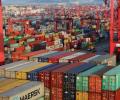
India's trade deficit reached a six-month high of $31.98 billion in July, driven by a sharp increase in imports, particularly crude oil, electronic goods, coal, and fertilisers. Both merchandise exports and imports recorded their second-highest levels during the same period.

Despite aggressive expansion, India's solar power sector faces significant hurdles from rising regional disparities in installed capacity and a looming manufacturing glut due to overcapacity in domestic solar equipment production, potentially leading to consolidation and pricing pressures.

New capital exposure norms implemented by the Reserve Bank of India (RBI) from July 1 have led to a noticeable drop in trading volumes, with Multi-Commodity Exchange (MCX) options premium ADTV falling by nearly 40 per cent in early July.

Hospital stocks have emerged as a strong theme in 2026, outperforming benchmark indices due to robust earnings growth, improved occupancy, higher average revenue per occupied bed, and aggressive expansion plans by major chains.

'You have seen the retrenchments by big corporates in the IT industry because they are not getting enough offers.' 'MSMEs in the manufacturing sector are really struggling. They do not know what to do. They are not able to predict what will happen tomorrow.'

Accenture's revised annual revenue growth forecast and weaker-than-expected fourth-quarter guidance have sent shockwaves through the Indian IT sector, causing major IT stocks and the Nifty IT index to tumble significantly.

Indian benchmark indices, Sensex and Nifty, closed almost unchanged in a volatile session as investors reacted cautiously to mounting geopolitical headwinds and a significant jump in crude oil prices, with Brent crude surging to USD 94.68 per barrel.
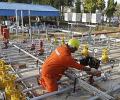
State-run oil-marketing companies (OMCs) are unlikely to significantly raise petrol and diesel prices despite crude oil nearing $100 a barrel, leading to potential margin pressure, while CLSA analysts project a 65 per cent upside for ONGC's stock.

India's electric two-wheeler (e2W) market is consolidating, with established manufacturers TVS Motor, Bajaj Auto, and Hero MotoCorp, alongside EV specialist Ather Energy, driving nearly 96% of incremental registrations in the first half of 2026, while former market leader Ola Electric experienced a significant decline in registrations.

State-owned Bank of Baroda (BoB) reported a 72 per cent year-on-year (Y-o-Y) drop in net profit to 1,278 crore for Q1FY27 due to a $600 million out-of-court settlement related to NMC Health Plc. In contrast, Bank of India (BoI) saw its net profit rise by 36.23 per cent Y-o-Y to 3,068 crore for the same quarter, driven by healthy loan growth and improved asset quality.

Indian benchmark indices Sensex and Nifty experienced a significant slump in early trade, driven by a sharp surge in crude oil prices above USD 120 per barrel, weak global market trends, and continued foreign fund outflows.
